Tariffs, changing material prices, and delivery delays can make it harder for original equipment manufacturers (OEMs) to keep parts available. Choosing a domestic roll-forming supplier can make purchasing and deliveries easier to plan, but it doesn't eliminate all supply risks.
.png?width=1200&height=627&name=Confused%20supervisor%20leaning%20on%20storage%20shelf%20(1).png)
Steel availability, factory capacity, and shipping still affect when parts reach your plant. Buyers need to understand how their supplier buys material, schedules production, and replaces stock as parts are used. This matters for recurring components such as shelf supports, wireways, and elevator tracks.
These concerns also appear in global trade research. In the Reuters 2026 Global Trade Report, 68% of surveyed global trade professionals named supply chain management as a top concern. For OEM buyers, a practical response is to review material availability, supplier communication, and restocking needs together.
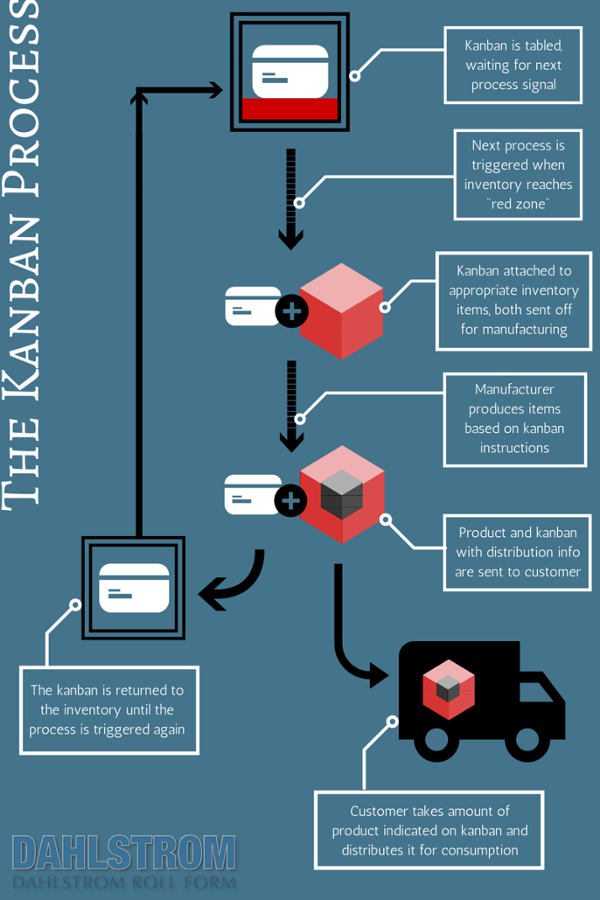
Vendor-managed inventory (VMI) sets the stock levels and restocking rules agreed by the buyer and supplier. Kanban is the signal that tells the supplier when to restock. This article explains how material planning, forecasts, supply reviews, production, packaging, and Kanban/VMI help keep an OEM supply chain moving. You’ll also learn what to review with your supplier before production begins.
Where Can an OEM Supply Chain Break Down?
Keeping parts available starts with understanding where delays can occur. Material must arrive before production can begin, and finished parts must then reach your plant. A delay at one stage leaves less time to handle problems at the next.
Raw Material Availability
.png?width=654&height=342&name=Stacked%20aluminum%20ingots%20(2).png)
The right coil grade, thickness, and finish must be ready for the production run. Late steel can delay forming. Before using a substitute, check that it meets the drawing and production requirements.
To avoid a gap between production runs, check steel mill lead times along with coil stock and expected usage. Material lead time is the time from placing an order to receiving it. The supplier needs enough material to support the next run and replace finished parts as you use them.
Production and Delivery Timing
Once material is available, the supplier still needs time and capacity to form, finish, and inspect the parts. Material arrival alone does not confirm when parts will ship. Truck availability and transit time also affect when parts reach your plant.
Integrated production operations can help reduce the time spent handling parts and waiting between steps. Depending on the part and tooling, the forming line may handle punching, notching, or labeling. Ask which steps need a separate station or schedule so those steps are included in the delivery plan.
.png?width=1200&height=627&name=truck%20leaving%20the%20loading%20dock%20at%20a%20distribution%20warehouse%20(1).png)
After production, packaging helps protect parts on their way to your plant. Nesting parts together can fit more in a truck. Protective dunnage, or packing supports, helps prevent shipping damage. Reusable containers may work for repeat deliveries if both teams agree on how returns will signal the need to restock.
Production time, packaging requirements, and transit time all affect when usable parts reach your plant. Ask which dates are confirmed and which depend on incoming material. Agree on how the supplier will report changes, and confirm packaging and labeling needs with your receiving team.
Sourcing Costs
Material, production, and shipping decisions also affect sourcing costs. Tariffs, shipping charges, and material prices can change a part’s cost. Review these costs along with tooling, stock levels, and delivery needs. A low part price has less value if parts do not arrive in time to keep production running.
Raw material cost transparency helps you see why prices change. Review material quotes for the next production period. Ask what the material price includes and how the supplier will explain price changes. Compare these costs with your stock and shipment plan.

How Does Kanban and VMI Work Together?
Agreed stock levels and restocking rules help buyers plan deliveries and inventory needs. A vendor-managed inventory program sets the stock levels and restocking rules for repeat production. Within that plan, Kanban provides the signal to send more parts.
That signal comes from the point where parts are used. With bundle-based Kanban replenishment, the customer reports the number of unopened bundles left. The supplier then sends enough to return stock to the agreed level. Both teams know what triggers the next shipment.
Set stock levels based on how fast you use parts and how long replacements take to arrive. Extra stock can give you time to respond to a delay. How much time depends on the stock on hand, your usage, and the replenishment lead time.
What Does Replenishment Look Like in Practice?
.png?width=1200&height=627&name=Warehouse%20storing%20large%20steel%20coils%20for%20manufacturing%20purposes%20(1).png)
For example, consider an OEM replenishment program that uses 1,000 parts a year, packaged in bundles of 50. The supplier first ships three bundles. When the customer reports one unopened bundle left, the supplier sends two more. The two-bundle shipment is intended to restore the agreed stock level, allowing for usage during delivery.
This example shows how a stock count triggers a shipment. Each OEM may need different bundle sizes and stock levels. Choose them based on how fast the parts are used and how long restocking takes.
Restocking finished parts also requires enough material for future runs. Raw-material ordering can also use stock triggers, with levels based on material usage and mill lead times. The steel supplier tracks run-coil stock, or coil prepared for production, in its warehouse. When that stock reaches the agreed reorder level, another master coil is ordered.
Why Do Forecasts and Supply Reviews Still Matter?
A stock count tells the supplier what needs replacing now, but it doesn't show future changes. When both teams review them together, forecasts and usage data support supply chain risk mitigation. Kanban tracks current usage, while a forecast helps the supplier plan for higher output, a slow season, or a revised part design.
Quarterly supply system reviews cover these topics:
- Consumption data: Review how many parts you use.
- Raw-material pipeline status: Check material on hand and on order.
- Market pricing: Review changes in material costs.
- Forecasts: Discuss expected future demand.
These reviews should also cover upcoming design or supply-system changes. Use the expected annual volume to decide whether raw-material ordering triggers need to change.
Use what you learn in the review to compare your stock plan with upcoming needs. If usage grows, check whether stock levels and restocking times still work. If the drawing changes, agree on what happens to existing parts and material before making the new version.
Some changes need attention before the next scheduled review. Share a major demand or design change as soon as you know about it so the supplier can update the plan.
.png?width=1200&height=627&name=Stacked%20aluminum%20ingots%20(3).png)
What Should Buyers Agree On Before Production?
Supply reviews are more useful when both teams have clear responsibilities from the start. A written supply agreement should define those roles and cover demand, stock levels, material purchases, and delivery. Review these details with your roll-forming partner:
- Part requirements: Confirm the drawing version, approved material, and quality checks needed to accept the parts.
- Demand: Share yearly usage, quantities needed per shipment, and seasonal changes.
- Inventory: Agree on stock levels, bundle sizes, and where parts will be held. Set how much raw material the supplier may buy for the next agreed purchasing period.
- Replenishment: Agree on the restock signal, how often you report counts, and how the supplier responds.
- Changes: Agree on how to report demand changes, drawing revisions, and delays.
- Packaging and freight: Set packaging, labeling, and delivery needs. Agree on who handles reusable containers and their return.
Inventory ownership, material purchasing, and delivery responsibilities also matter when sourcing recurring roll-formed components from one or more suppliers. Agree on who manages stock and how the suppliers will work together. One supplier may make communication easier, while using more than one can reduce the impact of a single-supplier disruption.
Whether you use one supplier or several, check that the sourcing arrangement meets your production and restocking needs. Clear agreements give both teams a basis for updating the plan when demand or supply changes.
Plan the Component and Its Supply Together
The part design and the supply plan need to work together. Domestic roll forming supports repeat production, while material planning, Kanban signals, and regular reviews keep parts available. Agreeing on how these steps fit your operation gives both teams a clearer plan for ongoing deliveries.
To discuss manufacturing and ongoing supply requirements, submit your drawing for review.

Keep Roll Forming Costs Under Control With Kanban Inventory Management

Communication Is Key To Supply Chain Risk Mitigation