As modern data centers evolve to support GPU-heavy technology and high-density storage, OEMs are being forced to rethink traditional server rack manufacturing. Today’s infrastructure must work harder than ever, balancing rising rack densities with the need for higher static load capacities and superior thermal management.
To stay competitive, choosing the right server rack manufacturer is no longer just about sourcing a frame; it is about finding a partner that utilizes precision roll forming, modular design, and in-line secondary operations. These manufacturing pillars ensure that your data center support infrastructure is structurally sound, thermally efficient, and ready for rapid deployment.
In this guide, we’ll show you how Original Equipment Manufacturers (OEMs) can navigate the shifting requirements of data center infrastructure and how to create server rack systems capable of scaling with next-generation technology demands.
Establishing a Scalable Manufacturing Foundation with Roll Forming
Data centers house thousands of servers, and the infrastructure holding them must be precise, durable, and cost-effective. OEM Roll forming is the industry standard for producing these components because it excels at creating the long, slender metal parts required for rack structures.
Unlike other fabrication methods like stamping or welding, roll forming is a continuous process that gradually bends flat sheet metal into a uniform profile. This method delivers three specific advantages for high-volume OEM production:
- High Volume & Efficiency: Once tooling is set, the process is highly repeatable, producing consistent components across production runs of thousands or even millions of parts.
- Complex Profiles: The process can fabricate complex cross-sectional shapes and intricate hole patterns necessary for mounting hardware, cable management, and thermal pathways.
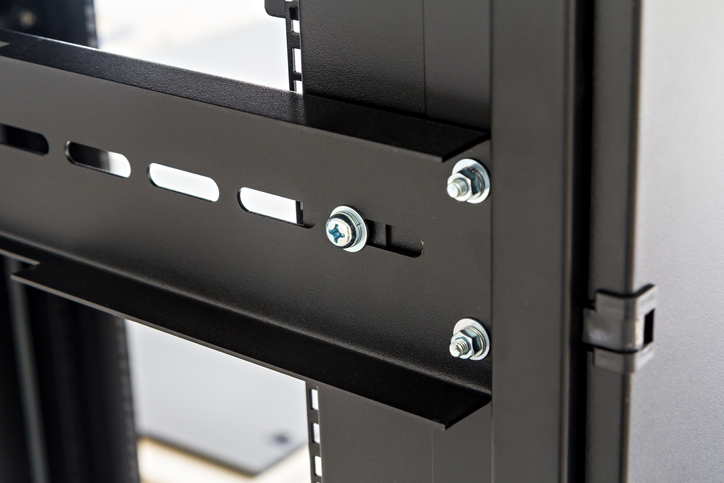
- Integrated Features: In-line punching allows for the creation of holes, slots, and notches during the forming process, eliminating the need for slow and expensive secondary operations.
These advantages translate directly into lower per-unit costs and faster time to-market for OEMs managing high-volume production schedules.
Key Components Manufactured
Roll forming produces virtually every structural element of a server rack system:
- Vertical beams that define rack height and bear primary loads
- Horizontal shelf beams and mounting rails for server installation
- Structural joists that provide lateral stability
- Side panels, doors, and cable management bars
- Accessory brackets for power distribution and grounding
This comprehensive capability allows OEMS to source complete rack systems from a single manufacturing partner, reducing supply chain complexity and ensuring component compatibility across the entire assembly. However, the real differentiator isn’t just what can be manufactured, it’s how precisely these components are produced.
Pillar 1: Achieving Operational Reliability Through Precision Engineering
In a high-performance data center, a fraction of an inch can compromise system reliability. Precision roll forming addresses these performance areas where dimensional accuracy directly impacts operational effectiveness:
1. Eliminating Downtime with Perfect Rail Alignment
Modern servers use slide rails that must align perfectly across the entire rack depth. Roll-formed parts can achieve repeatable tolerances up to +/- 0.005” ensuring that slide rails align correctly every time. This precision prevents jammed slides, misaligned connectors, and the costly downtime that results during server installations or hot-swap operations.
2. Protecting Data via EMI/RFI Shielding
Electromagnetic interference (EMI) and radio frequency interference (RFI) can disrupt network communications and corrupt data transmissions. Roll-formed steel channels provide strong dimensional consistent frames for shielding materials.
The continuous profiles eliminate gaps and weak points that allow interference to penetrate, creating a Faraday cage effect that protects sensitive electronics. This level of shielding integrity cannot be reliably achieved with welded assemblies or stamped components.
3. Enhancing Thermal Management and Airflow
Inadequate airflow creates hot spots that reduce server lifespan and trigger thermal throttling that degrades performance. Roll forming allows manufacturers to create slim reinforcement profiles that maintain structural integrity without blocking airflow pathways.
These optimized geometrics preserve cable access channels while directing cooling air precisely where it’s needed. Tight tolerances ensure minimal leakage around doors and containment structures, improving HVAC energy costs.
Together, these precision capabilities ensure every rack performs as designed under real-world data center conditions. But even the most precisely manufactured components must adapt to changing infrastructure demands.
Pillar 2: Future-Proofing Infrastructure with Modular Design
Data center requirements evolve faster than infrastructure replacement cycles allow. High-performance server racks must accommodate the transition from legacy 1,200 lb. loads to modern densities exceeding 2,000 lbs. Modular design enables this adaptability without requiring complete system replacement.
Retrofitting Existing Infrastructure
Roll-formed stiffeners (hat channels and box beams) can be retrofitted to existing frames to boost capacity by 20–30% without a complete structural overhaul.
Strategic Material Strategy
OEMs should use a hybrid material strategy that optimizes both performance and cost. High-strength low-allow (HSLA) steel provides the tensile strength required for primary structural uprights and load-bearing members.
For service-oriented components like battery trays, cable management arms, or sliding rails, aluminum offers an ideal combination of corrosion resistance, lighter weight for easier handling, and sufficient strength for non-structural applications. This material differentiation allows engineers to spec the right material for each component’s specific requirements.
This modular, material-optimized approach gives OEMS the flexibility to configure racks for specific applications while maintaining a standardized manufacturing platform. However, flexibility means little if manufacturing bottlenecks prevent rapid deployment.
Pillar 3: Maximizing ROI with Integrated In-Line Operations
Manufacturing efficiency determines whether modular server rack systems can be delivered at scale. Integrated secondary operations eliminate process bottlenecks and reduce the cumulative cost of each component that moves through the production line.
In Line Processing
Traditional fabrication requires components to move between separate workstations for punching, notching, and finishing operations. Each transfer introduces handling time, potential misalignment, and quality control checkpoints.
Roll forming integrates these operations directly into the forming line. Holes, slots, and notches are created at precise locations as the material passes through the rolls, ensuring perfect feature placement and eliminating the delays associated with multi-step processing. This integration reduces assembly time and improves overall system accuracy.
Grounding and Electrical Compliance
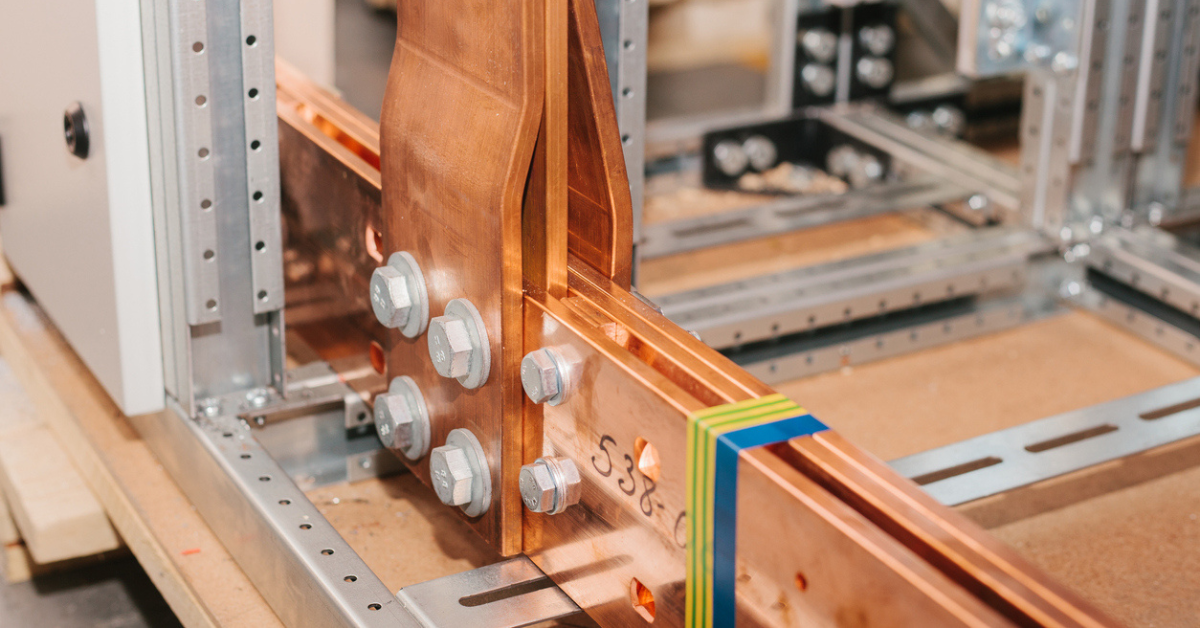
Electrical grounding is mandatory for data center safety and equipment protection. Roll forming produces copper busbars and steel grounding channels with pre-punched mounting holes that align perfectly with rack mounting standards defined in NEC Article 250.
This precision ensures proper electrical continuity throughout the rack structure without requiring field modifications or custom drilling that could compromise grounding effectiveness. Components arrive at the assembly line ready for immediate installation.
Material Efficiency and Cost Control
Roll forming generates remarkably little waste, typically 0.5% to 3% scrap rates compared to 15-30% for stamping operations. When working with expensive materials like copper busbars, stainless steel panels, or specialized alloys, this efficiency creates substantial cost savings.
Lower scrap rates also reduce environmental impact and simplify waste stream management, factors that increasingly matter to sustainability-focused enterprises. These manufacturing efficiencies compound across thousands of components, translating into faster lead times, more predictable pricing, and the ability to scale production without proportional increases in overhead.
For OEMs evaluating manufacturing partners, these capabilities separate suppliers capable of supporting long-term growth from those limited to small-batch production.
Executing an OEM Audit: How to Evaluate Your Partner
When evaluating potential server rack manufacturing partners, OEMs should use these questions to assess capabilities across all three pillars:
- Tolerance Capability: Can you maintain +/- 0.005” tolerances on critical profile segments? Request dimensional reports and process capability studies that demonstrate consistent quality across production runs.
- In-Line Operations: What features are integrated into the forming process versus handled as secondary operations? Understanding this split reveals potential bottlenecks and helps predict lead times under high-volume scenarios.
- Material Expertise: Do you support HSLA steel, stainless steel, aluminum, and copper with documented low scrap rates? Ask for material certifications and scrap rate data from recent projects of comparable scale.
- Modular Engineering: Do you offer engineered bolt-on profiles for capacity upgrades and thermal management? Review their catalog of retrofit solutions and ask about custom engineering support for application-specific requirements.
The answers to these questions will reveal whether a manufacturer can support your current production needs while maintaining the flexibility required for future product development.
Building Racks that Scale
Supporting next-generation data center technology requires server racks that balance load capacity, thermal performance, and rapid deployment. By prioritizing precision roll forming, modular design, and integrated manufacturing operations, OEMs can build infrastructure that evolves alongside data center demands rather than requiring costly replacement as technology advances.
The right manufacturing partner doesn’t just supply components—they provide the engineering expertise and process capabilities that enable your rack systems to meet performance specifications consistently, scale production efficiently, and adapt to changing market requirements.
As data centers continue pushing the boundaries of density and performance, these three manufacturing pillars will increasingly separate viable infrastructure from systems that limit growth.
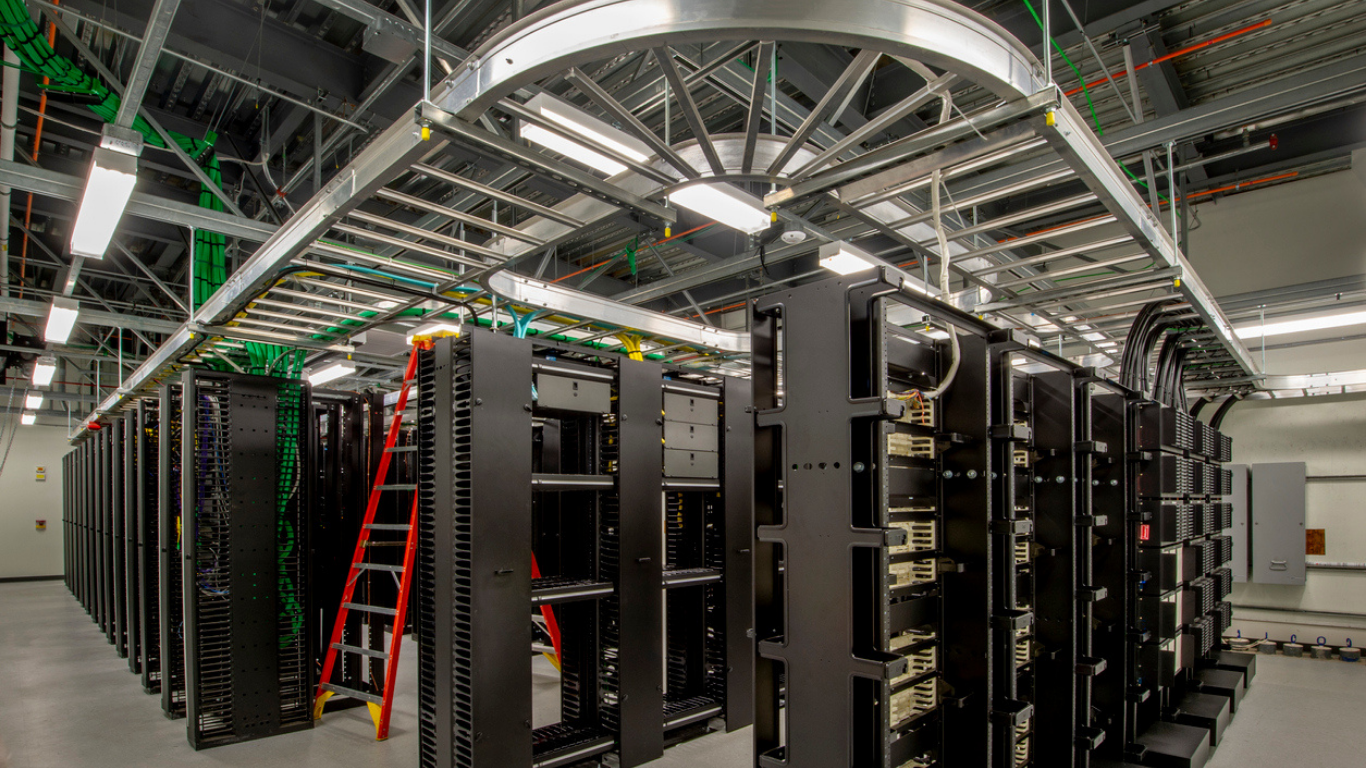
Data Center Support Infrastructure: Raised-Floor vs. Overhead Systems
Data Center Rack Design & Infrastructure: Is Roll Forming a Fit?