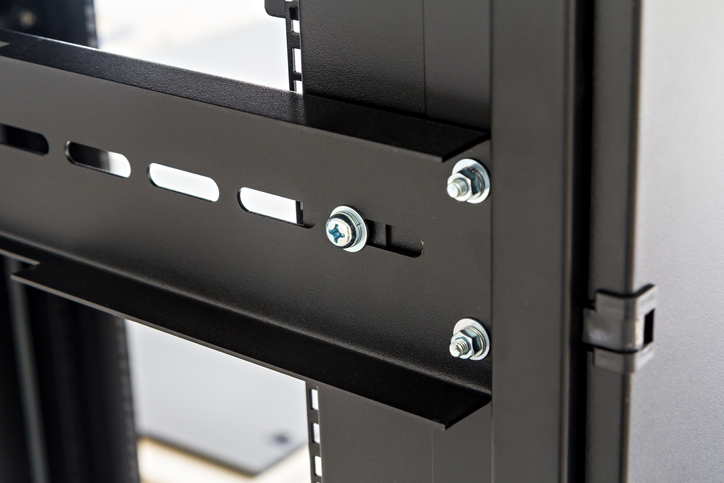
Why HVAC Design Makes or Breaks Data Center Performance
Data centers power the digital services we rely on every day, from cloud computing to Netflix streaming. As heat output increases with every generation of servers, cooling systems now play a critical role in uptime, energy efficiency, and long-term operating costs.
Did you know the physical infrastructure of your server racks and cooling system is just as important as the technology itself? Traditional HVAC manufacturing, however, often falls short in data farms.
Data centers require components that are corrosion-resistant, dimensionally precise, vibration-tolerant, and capable of forming airtight seals. In this article, we’ll discuss how roll forming solves these challenges by producing accurate, consistent HVAC components at scale.
Key HVAC Components in Data Centers
For data centers and adjacent energy storage environments (e.g., power supply rooms), structural components support airflow management, structural stability, and system reliability. Pay close attention to these elements of your infrastructure:
Airflow & Ducting
- Strong, leak-resistant ductwork
- Cooling tower louvers
- Dampers and airflow control components
Equipment Casings & Frames
- Air conditioner housings
- Electric heater frames
- Filter frames for high-density cooling systems
Thermal Containment Structures
- Hot/cold aisle containment frames
- Door frames featuring sealing grooves for perforated panels
- Profiles designed to minimize leakage and improve pressure control
Structural & Support Components
- Brackets for HVAC equipment
- Rails for chilled water piping or in-row coolers
- Mounting channels for thermal panels, fans, or sensors
Heat Pump Components
- Cabinets, rails, vertical members, and protective cases
- Structural chassis and mounting hardware
Shameless plug: All of these parts are a match for the roll forming manufacturing process. Data center infrastructures benefit from roll forming’s strength, precision, and scalability to ensure continuous airflow management, structural stability, and system reliability.
4 Data Design HVAC Design Tips
1. Build Airflow and Thermal Efficiency Inside Rack Systems
Even outside the HVAC room, cooling effectiveness depends heavily on rack-level infrastructure and airflow management.
- Slim reinforcement profiles maintain cable access and airflow pathways for legacy racks, unlike bulkier alternatives that can obstruct air circulation and raise equipment temperatures.
- Tight tolerances ensure minimal leakage around doors, panels, and containment structures, improving cooling efficiency and lowering energy consumption.
Together, these enhancements support reliable rack-level thermal performance.
2. Pick Durable Materials
Choosing the right material is vital for durability, efficiency, and longevity in HVAC systems. Only work with materials suited for high-performance data center HVAC systems.
|
Material |
Advantages |
Best Use |
|
Galvanized Steel |
Corrosion-resistant, long service life, easy to fabricate |
Standard ductwork and structural components |
|
Galvalume Steel |
Excellent corrosion resistance, strong, and cost-effective |
Large-scale cooling infrastructure |
|
Stainless Steel |
Hygienic, corrosion-resistant, durable |
Environments requiring high cleanliness or chemical resistance |
|
Copper |
Antimicrobial, superior heat transfer |
Sensitive environments, refrigerant tubing |
Make sure your structural channel manufacturer has machines and processes that are compatible with the material you choose.
3. Keep Compliance and Safety Top-of-Mind
Data center HVAC systems must meet strict industry standards. Compliance means following national, international, and industry regulations that protect data, ensure reliable operations, and support environmental goals.
This includes security standards like SOC 2 and ISO 27001, data rules such as HIPAA and GDPR, and energy guidelines from groups like ASHRAE.
To meet these requirements, every physical system, HVAC included, must be accurately documented and built to specifications that keep the facility secure and dependable.
Your manufacturing method should aid compliance by delivering:
- Repeatable parts held to exact tolerances
- Profiles engineered for specific safety or certification requirements
- Features like hemmed edges for improved technician safety
- Materials that support corrosion and fire-resistance standards
This precision helps operators meet regulatory requirements without adding complexity to the manufacturing process.
3 Ways Roll Forming Cuts HVAC System CostsCost control is a top priority for data center engineers and facility managers. Roll forming reduces total HVAC system cost through three major advantages. 1. Minimal Material WasteContinuous coil-fed manufacturing generates far less waste than traditional cutting and forming methods (which create up to 50% scrap). When working with materials like stainless steel or copper, reduced scrap translates into meaningful savings. 2. Fewer Secondary OperationsSheet metal punching, notching, cutting, and even certain fastening features can all be integrated in-line. This reduces labor, shortens lead times, and minimizes human error – improving quality, lead time, and cost efficiency. 3. Faster InstallationRoll-formed components arrive ready for assembly, with built-in features that allow technicians to install systems more quickly and with fewer adjustments. The result is decreased installation time and lower on-site labor costs. |
4. Plan for Installation and Maintenance
Because roll-formed components offer consistent, precise dimensions, they help ensure that both new installations and future upgrades are easier to plan and execute. In-line punched features—such as holes, notches, or slots—also support flexible assembly and simplified disassembly as equipment needs evolve.
Together, these qualities reduce downtime, improve long-term serviceability, and lessen labor demands on facility teams as systems change over time.
Support Your Data Center HVAC System Long-term
Follow these tips to create a cost-effective, highly precise manufacturing solution for data center HVAC systems. By improving airflow control, reducing waste, shortening installation time, and meeting strict industry standards, your HVAC design – down to the smallest component – should help the cooling infrastructure perform reliably at scale.
If your data center is facing high thermal loads and rising energy costs, consider investing in roll-formed HVAC components as a strategic choice that enhances efficiency, lowers operational risk, and supports long-term system performance.

.png)
Steel vs. Aluminum UPS Battery Racks: A Spec Guide
Data Center Support Infrastructure: Raised-Floor vs. Overhead Systems